Ground Source vs Air Source: A Sustainable Showdown
Choosing the right renewable heating solutions can feel like standing at a crossroad in a blizzard. Ground source heat pumps (GSHPs) tap into earth’s constant warmth. Air source heat pumps (ASHPs) draw energy from the air you breathe. Both slash your carbon footprint and cut bills, but they work differently under the bonnet. This guide will walk you through installation costs, efficiency, maintenance and environmental impact for each system. We’ll also show how Megawave’s advanced air source units harness zero-carbon refrigerant R290, making sustainable heating solutions accessible everywhere.
By the end, you’ll know which setup suits your home or business. No jargon. Just clear, practical insights you can act on today. Ready to explore renewable heating solutions with Megawave: Eco-Friendly Heating Revolution for Innovative Air Source Heat Pump Solutions? Discover renewable heating solutions with Megawave: Eco-Friendly Heating Revolution for Innovative Air Source Heat Pump Solutions
How Ground Source Heat Pumps Work
Ground source heat pumps use buried loops—either horizontal trenches or vertical boreholes—to collect the Earth’s stored solar energy. In winter, the ground stays at a steady 8–12 °C below the frost line. A pump circulates fluid through these loops, extracts the latent heat, then boosts it with a compressor to a usable temperature for radiators or underfloor circuits. In summer, the reverse cycle can dump heat back into the ground, offering passive cooling.
Efficiency and Cost Savings
- For every 1 kW of electricity in, a GSHP delivers up to 4 kW of heat.
- Annual running costs can be 50–60% lower than gas boilers.
- Upfront investment is higher due to groundworks.
Installation Process and Requirements
- Site survey to assess soil type and ground temperature.
- Design of loop field (horizontal vs. vertical).
- Borehole drilling (typically 8″ diameter) or trenching across your garden.
- Connection to an indoor heat pump unit (about the size of a fridge).
Pros and Cons of Ground Source Systems
Pros:
– Excellent efficiency (up to 400%).
– Minimal noise—similar to a fridge humming in the kitchen.
– Low maintenance: annual service only.
– No visible equipment, so no planning permission needed.
Cons:
– Higher upfront cost for drilling or trenching.
– Garden space may be disrupted during installation.
– Slower to install—project timelines vary by ground type.
Government incentives like the Boiler Upgrade Scheme can offer up to £7,500 towards a GSHP, but some homeowners still find the upfront price a barrier.
How Air Source Heat Pumps Work
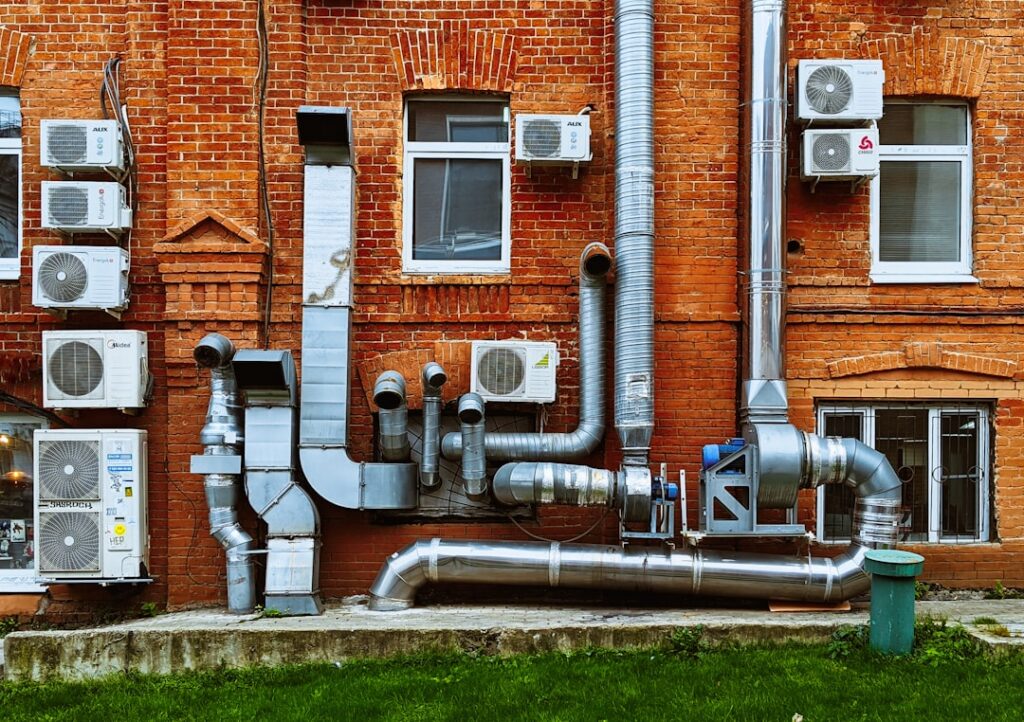
Air source heat pumps extract latent heat from outdoor air—even when it’s -15 °C outside. An outdoor fan unit draws air over an evaporator coil containing a refrigerant (Megawave uses zero-carbon R290). The refrigerant evaporates, gets compressed to raise its temperature, then transfers heat indoors through a heat exchanger. At the flip of a switch, the cycle reverses for cooling in summer.
Harnessing Air and Zero-Carbon Refrigerants
- R290 has a negligible Global Warming Potential (GWP).
- Draws thermal energy from ambient air.
- Won’t deplete ozone or add carbon overhead.
Installation Simplicity
- No boreholes or trenches—ideal for retrofit in urban spaces.
- Outdoor unit can sit on brackets or a concrete pad.
- Indoor unit links to radiators, underfloor or fan coils.
- Installation often completed in 1–2 days.
Megawave packages full design, seamless installation, and aftercare into one service. Ready to get your personalised plan? Start your air source heat pump quote
Pros and Cons of Air Source Systems
Pros:
– Lower upfront cost than GSHPs.
– Fast installation with minimal groundworks.
– Dual heating and cooling capabilities.
– Government grants for ASHPs are available, reducing your net cost.
Cons:
– Efficiency dips slightly in extreme cold, though modern units cope down to -20 °C.
– Outdoor unit noise—around 45 dB, comparable to a quiet conversation.
– Annual servicing required for refrigerant checks and filter cleaning.
Comparing Ground Source and Air Source: Key Metrics
| Metric | Ground Source HP | Air Source HP |
|---|---|---|
| Seasonal CoP | Up to 4.5 | Around 3–3.5 |
| Typical Installation Cost | £15,000–£20,000 | £8,000–£12,000 |
| Maintenance | Annual service; loops are worry-free | Annual service; filter & refrigerant checks |
| Space Requirements | Large garden or boreholes | Minimal outdoor footprint |
| Noise Levels | ~40 dB (fridge-quiet) | ~45 dB (soft conversation) |
| Planning Permission | Generally none visible | Permitted development in most cases |
| Cooling Capability | Passive (ground sink) | Active cooling cycle |
| Carbon Savings | 70–80% reduction vs. gas | 60–70% reduction vs. gas |
Both systems deliver compelling carbon cuts and lower your heating bills. But if you lack garden space or want quick setup, air source units often win. And that’s where Megawave shines with its zero-carbon R290 technology and flexible finance options. Discover renewable heating solutions with Megawave: Eco-Friendly Heating Revolution for Innovative Air Source Heat Pump Solutions
Why Megawave’s Air Source Heat Pumps Stand Out
When you compare the market leaders—NIBE, Vaillant, Daikin—you see strong products. But most brands focus on either tech specs or sales. Megawave merges cutting-edge refrigerants with customer-centric services:
• Utilisation of zero-carbon R290 refrigerant for minimal GWP.
• Tailored system design to match your heat loss profile.
• Expert installation by accredited engineers.
• Comprehensive annual maintenance support.
• Flexible finance options to spread the cost.
• Government grants help slash your upfront outlay.
If you want hassle-free, eco-friendly heating, Megawave’s offering is your best bet. Request your bespoke plan today and see real savings unfold. Get your heat pumps installation quotation today
What Our Customers Say
“I was sceptical about swapping my old boiler, but the Megawave team made everything simple. My energy bills dropped by 40%, and the system is whisper-quiet. Love it!”
— Emma L., Homeowner, Manchester“Our café had no yard space for GSHPs. Megawave fitted an ASHP in under three days. We get heating and air-con from one unit, and customers notice the comfort boost!”
— Tariq S., SME Owner, London“The finance plan and grant advice were spot-on. Installation was clean and quick. The Megawave engineers explained every step.”
— Claire R., Landlord, Bristol
Making the Switch to Greener Heating
Switching to a low-carbon heat pump isn’t just about savings—it’s about future-proofing your property, complying with upcoming efficiency standards and safeguarding against volatile fuel costs. With Megawave:
- We carry out a free site survey and heat loss analysis.
- Design the perfect system—GSHP or ASHP—based on your property.
- Handle government grant applications on your behalf.
- Install swiftly and neatly, with minimal disruption.
- Provide annual servicing so your unit runs like new for years.
Every step is geared towards maximising efficiency and minimising hassle. Climate targets? Sorted. Comfort? Delivered.
Ready to Embrace Renewable Heating Solutions?
Invest in a greener future. Lower your bills. Cut carbon. And enjoy reliable warmth all year round. Take the first step now: Discover renewable heating solutions with Megawave: Eco-Friendly Heating Revolution for Innovative Air Source Heat Pump Solutions
Share
Related posts